Logistics
Keep everything moving in your factory
Logistics is much more than just the transport of materials. It plays a decisive role in determining how stable, efficient, and cost-effective your production operations are. The goal is to provide the right goods in the right quantity, at the right place, at the right time, and in the right quality—while making optimal use of space, inventory, resources, and costs.
We develop and implement comprehensive logistics systems that optimally integrate material flow with production requirements. In doing so, we take an end-to-end view of the entire value chain: from goods receipt through warehousing, transportation, and production supply to goods shipment. By strategically optimizing material and information flows, we reduce inventory, eliminate wait times, and create transparent, high-performance processes.
Our commitment does not end with a concept on paper. We oversee implementation on-site, support the rollout of new processes, and work closely with your team until the developed solutions function sustainably in day-to-day operations. In this way, we achieve measurable improvements in productivity, supply reliability, on-time delivery, and cost-effectiveness.
Our performance
- Comprehensive analysis of your production and logistics structures to identify opportunities for optimization
- Redesign and optimization of future-oriented logistics systems and production concepts
- Development of customized logistics solutions for efficient, flexible, and future-proof factories
- Creation of transparency in material and information flows through structured process analyses
- Validation of logistics and production concepts and investments using material flow and plant simulations
- Implementation from concept development through requirements specification, bidding, and supplier selection to production ramp-up
- Coordination of all project participants and interfaces throughout the entire project lifecycle
Your benefit
- Proven solutions from various industries and complex production environments
- Holistic concepts achieved by bringing together all relevant disciplines
- Future-proof and scalable logistics structures for efficient and sustainable value chains
- High planning reliability through digital simulation and thorough evaluation of factory and logistics concepts
- Long-term support from the initial idea through to successful implementation
- Sustainable efficiency gains through the optimization of space, resources, and equipment
or directly by email:logisticsnoSpam@munscheknoSpam.com
In logistics projects, a wide range of challenges frequently arise, encompassing both technical and organizational aspects. Typical difficulties stem from complex material flows, limited space availability, evolving requirements, and the integration of new logistics systems into existing IT structures such as WMS, MES, or ERP. Data migration and the establishment of reliable data foundations for planning are also often underestimated hurdles.
A central issue is the shortage of skilled personnel, which increasingly necessitates the automation of logistics processes. In addition, cost-optimized approaches and the implementation of changes during ongoing operations are essential to avoid operational disruptions. We address these challenges through structured analysis, transparent planning, and proven practical solutions tailored to the specific requirements of our clients.
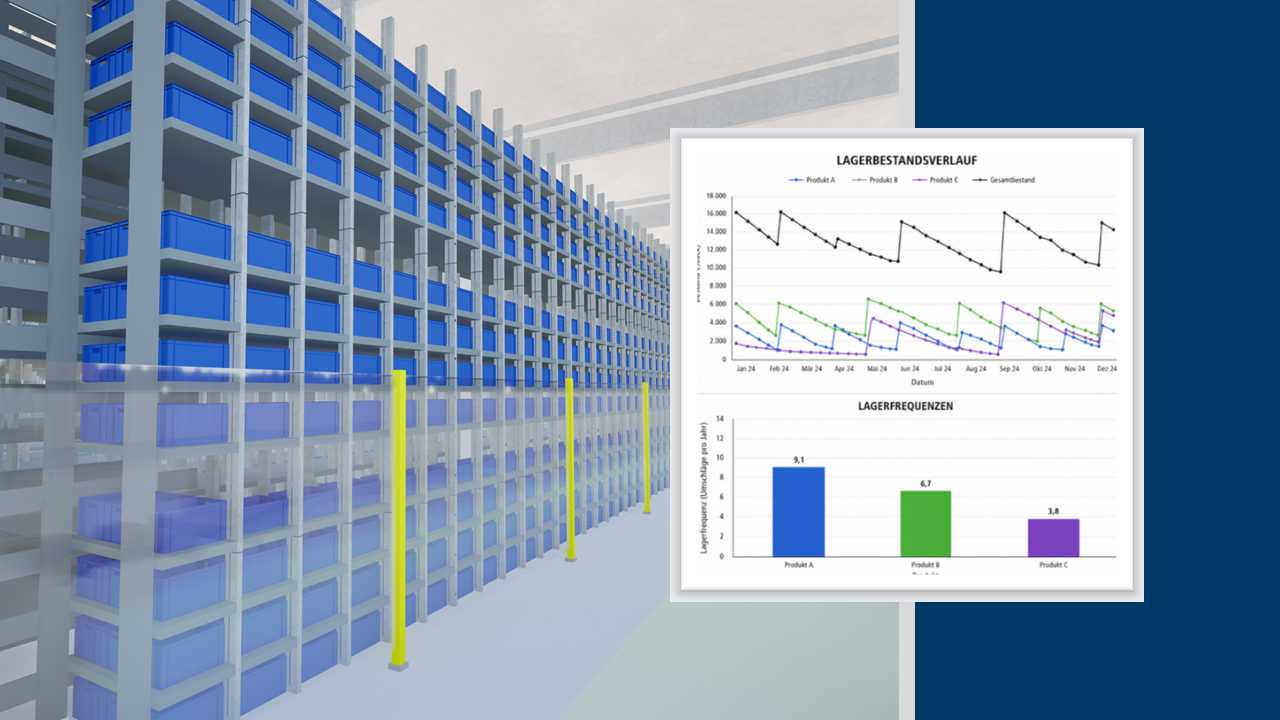
A thorough material flow analysis is the key to a successful project start in logistics and production planning. It provides the foundation for a shared understanding of processes and terminology within the project team and ensures clarity regarding the current state of internal material flows. By visualizing these flows, bottlenecks can be identified early, facilitating targeted potential analysis and optimization. At the same time, the analysis delivers important key performance indicators and a reliable basis for comparison for subsequent target concepts and measures.
Material flow analysis supports the dimensioning of storage and transport systems and helps plan resources efficiently. Furthermore, it enables the prioritization of optimization measures based on valid data. Overall, a thorough material flow analysis creates transparency, reduces project risks, and establishes a solid foundation for sustainable efficiency improvements and reliable decision-making.
A structured data collection and analysis process is essential for optimizing logistics and production processes. In the first step, data is gathered through discussions with the relevant departments, combined with the evaluation of system-supported data sources such as SAP, ERP, and WMS systems, as well as innovative IoT and wearable technologies. In addition, data is captured through traditional time studies and targeted process observations.
Data preparation is carried out methodically using tools such as Excel, Access, or professional BI software, and is visualized in understandable formats such as BPMN models, Sankey diagrams, value stream analyses, material flow diagrams, and layout dashboards. This enables a unified understanding of processes and promotes transparent communication within the project team. From these visualized data, bottlenecks are identified and improvement potentials are derived. This is achieved through the comparison of key performance indicators (KPIs), benchmark analyses, and scenario comparisons based on defined target values. The derived process optimization measures are then prioritized and concretely developed to achieve measurable effects on productivity, throughput, and resource utilization.
This data-driven approach not only creates transparency but also provides a solid foundation for sustainable and economically sound optimization decisions.
Choosing the right storage and transport systems is crucial for efficient material flows, short throughput times, and low process costs in logistics and production.
There are various storage systems that offer different advantages depending on the application, flexibility, level of automation, and investment requirements:
-
Pallet racks: Particularly suitable for palletized goods and high-bay warehouses. They offer medium flexibility and low to medium automation levels. Investment costs are low to medium, and they are considered a standard solution that can be expanded modularly.
- Flow racks: Mainly used in FIFO processes and picking operations. They are less flexible but offer medium to high automation levels. Investment costs are medium, making them ideal for high turnover rates.
- Mobile racks: Designed for space optimization with low usage. They feature low flexibility and low automation levels. Investment costs are medium. These racks are mechanically movable and particularly space-saving.
- Cantilever racks: Suitable for storing long goods such as pipes or profiles. They offer medium flexibility, low automation, and low investment costs. They are a robust system for bulky items.
- Small parts storage / shelving systems: Designed for storing small items with manual retrieval. They offer high flexibility, low automation, and low investment costs. These systems are ideal for spare parts and small components, allowing flexible usage.
- Automated small parts warehouses (ASPW): Used for automated picking and storage of small items. They provide medium flexibility, high automation, and require high investment. They operate with gripper- or shuttle-based systems and allow high-speed handling.
- Shuttle systems: Designed for highly dynamic storage processes, particularly in e-commerce. They offer high flexibility, very high automation levels, and require significant investment. These systems are scalable and highly efficient for high-frequency operations.
In addition, there are numerous transport systems that differ in application, flexibility, automation, investment requirements, and special features:
- Manual pallet trucks (hand trucks): Typically used for simple transport tasks over short distances. They are very flexible, non-automated, and require very low investment. Ideal for manual processes.
- Forklifts and stackers: Suitable for internal transport and pallet stacking. They offer high flexibility, low automation, and medium investment costs. They are versatile and widely used.
- Tow trains (tugger trains): Commonly used in series production and just-in-time processes. They provide medium flexibility, medium automation, and medium investment requirements. Efficient for transporting large quantities over longer distances.
- Discontinuous conveyors (hoists or cranes): Used for transporting loads with variable routes. They offer low flexibility, medium automation, and medium to high investment costs. Suitable for specialized transport tasks.
- Floor-bound conveyor technology: Used in automated production and storage areas. Low flexibility, high automation, and high investment. Enables continuous material flow.
- Continuous chain or roller conveyors: Designed for continuous transport of goods along fixed routes. Inflexible, highly automated, and associated with high investment. Ideal for standardized high-throughput processes.
- Power & Free systems (P&F): Used in assembly and for variable takt times. Medium flexibility, high automation, and high investment. Enable buffering and sorting of transport goods.
- Overhead conveyor systems (OHS): Suitable for overhead transport in production lines. Medium flexibility, high automation, and high investment. Save floor space and allow complex routing.
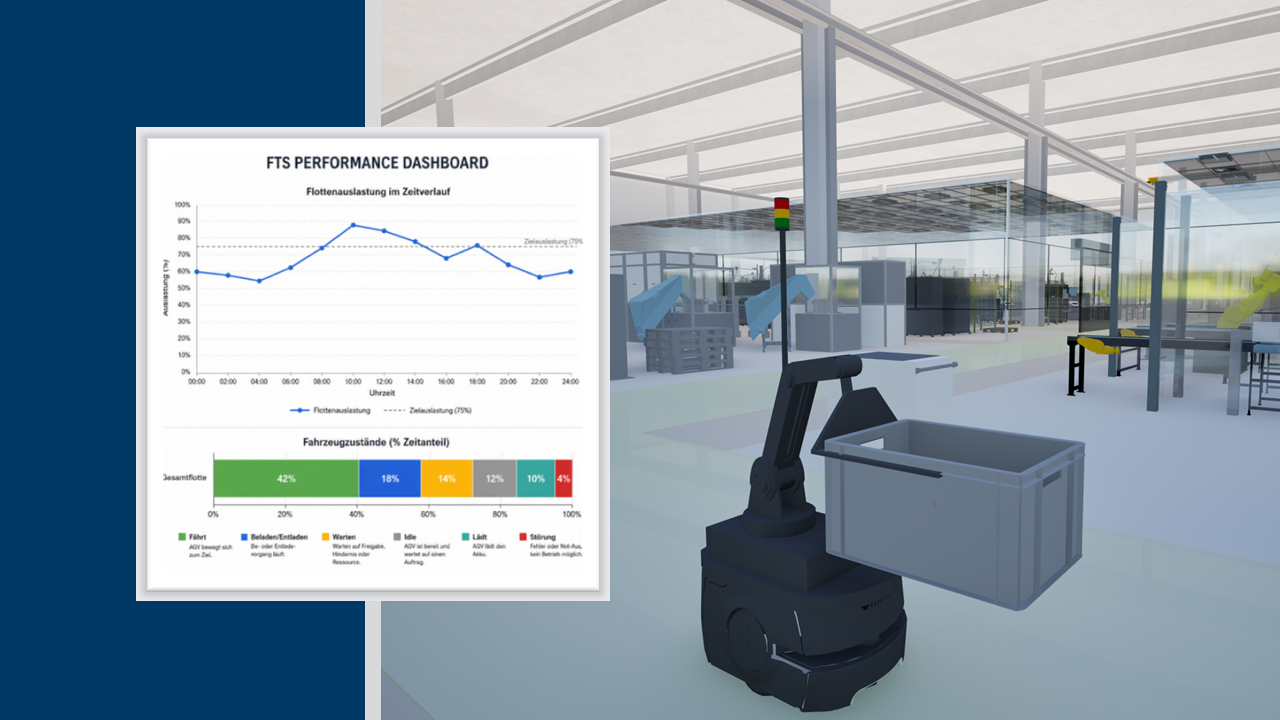
- Automated guided vehicles (AGVs): Used in intralogistics and automated material flows. High flexibility, high automation, and high investment. Programmable and scalable.
- Autonomous mobile robots (AMRs): Suitable for flexible, intelligent transport solutions, especially in dynamic environments. Very high flexibility, very high automation, and high investment. Navigate autonomously and adapt to changes.
Selecting the right system depends on many factors – such as warehouse structure, throughput, degree of automation, and investment framework. A structured approach leads to the optimal solution.
Steps for Selecting the Appropriate System:
-
Needs Analysis & System Comparison: Analysis of the product range, warehousing strategy, facility layout, and transport volumes.
-
Specification Sheet (Requirements Definition): Documentation of all functional, technical, and economic requirements.
-
Supplier Research & Proposal Evaluation: Identification of suitable providers, request for proposals, and evaluation based on criteria such as investment costs, scalability, and operating expenses.
-
Recommendation & Decision: Assessment of all options considering benchmarks, future viability, and system integration.
By following this process, companies can ensure that the selected storage and transport system is cost-effective, efficient, and future-proof.
A dynamic simulation is a powerful tool for digitally mapping and analyzing complex logistics and production-related processes. It provides a reliable basis for decision-making by making process interrelationships visible and identifying potential risks at an early stage.
The benefits of simulation throughout a project include:
- Hidden influencing factors become visible: Many interactions and dependencies between processes can only be identified through dynamic analysis.
- Process understanding is improved: Visualizing system behavior promotes a shared understanding across the entire project team—cross-functional and interdisciplinary.
- Planning risks are minimized: Early identification of bottlenecks, congestion, or underutilization helps avoid planning errors and prevents costly rework.
- Investments can be substantiated: Simulation provides reliable insights into performance limits, system behavior, and alternatives, enabling well-founded investment decisions.
- A digital twin is created: The simulation model developed can be used beyond the project phase—for rapid follow-up analyses, ongoing optimizations, and as a digital representation of the real system.
- Bottlenecks and performance limits are analyzed: Simulation allows for the identification of constraints and targeted adjustment of process parameters to improve efficiency.
Dynamic simulation is particularly useful when:
- Multiple influencing factors act on the system simultaneously,
- Processes are highly interdependent or run in parallel,
- The system exhibits high complexity or dynamic behavior,
- Strategic or capital-intensive investments are planned,
- New technologies or automation concepts are to be implemented.
How can investment decisions be secured through simulation?
Simulations provide a data-driven method to evaluate and systematically secure planned investments even before plants or processes are realized.
Simulation supports investment assurance in the following ways:
- Functionality of planned systems is validated: Whether layout, material flow, or capacity, simulation tests functionality under realistic conditions.
- Weak points are identified early: Backlogs, idle times, overloads, or inefficient resource utilization can be detected during planning and addressed proactively.
- Alternative concepts can be objectively compared: Different scenarios or solution approaches can be evaluated in terms of performance, costs, and resource requirements.
- Planning is optimized before implementation: Processes, material flows, and cycle times can be adjusted in the model to reduce the need for modifications in actual operation.
- Management and stakeholders receive transparent decision-making support: Simulation provides verifiable metrics and visualizations to justify investments and secure approvals.
- Simulation does not replace detailed planning—it makes it more robust and transparent. By securing investments through dynamic simulation, risks are reduced, costs are saved, and the likelihood of project success is significantly increased.
Intralogistics in cleanrooms places particularly high demands on processes, technology, and the systems used. Compared to conventional logistics environments, numerous specification-relevant factors must be considered to prevent contamination and maintain the cleanroom classification.
Particularly critical aspects include:
- Logistics equipment must be matched to the cleanroom class: Transport carts, conveyor systems, and storage solutions must be designed to minimize particle emissions. Additionally, requirements regarding microbiological safety and the cleanability of materials apply—especially for GMP-compliant applications.
- The material airlock can become a logistical bottleneck: Material airlocks serve as the interface between different hygiene and cleanliness zones (non-clean, clean, cleanroom). Airlock processes often cause waiting times and throughput limitations, which must be considered early in layout and process planning. Simulation or capacity analysis can help assess this potential bottleneck.
- Cross-zone transport is a central challenge: Within a cleanroom, materials are frequently transported across different classification levels. Each level has specific regulations for personnel, equipment, and processes. To prevent cross-contamination, a strict zoning concept is required. This includes regulated traffic routes, defined cleaning intervals, and clearly separated logistics systems.
Planning cleanroom logistics must therefore be based not only on technical considerations but also on regulatory requirements. Early coordination with quality assurance, production, and logistics planning is essential to ensure smooth and safe processes.