Engineering
Combine economic efficiency and sustainability
A sustainable design of your supply system/building technology systems is crucial for the overall efficiency of your sites and production facilities. Decarbonization is the order of the day and is expected from customers and employees as part of CO2 balancing. In addition, energy efficiency is centrally important for the security of supply and competitiveness of your company in the context of sharply increased energy costs.
Our job is to optimize your energy and CO2 balance, to uncover potential savings and to think and calculate supply alternatives. Here we are working closely with specialists to show off the latest state of the art. It is important to us with conviction to bring you forward with smart, intelligent solutions when it comes to energy efficiency and sustainability.
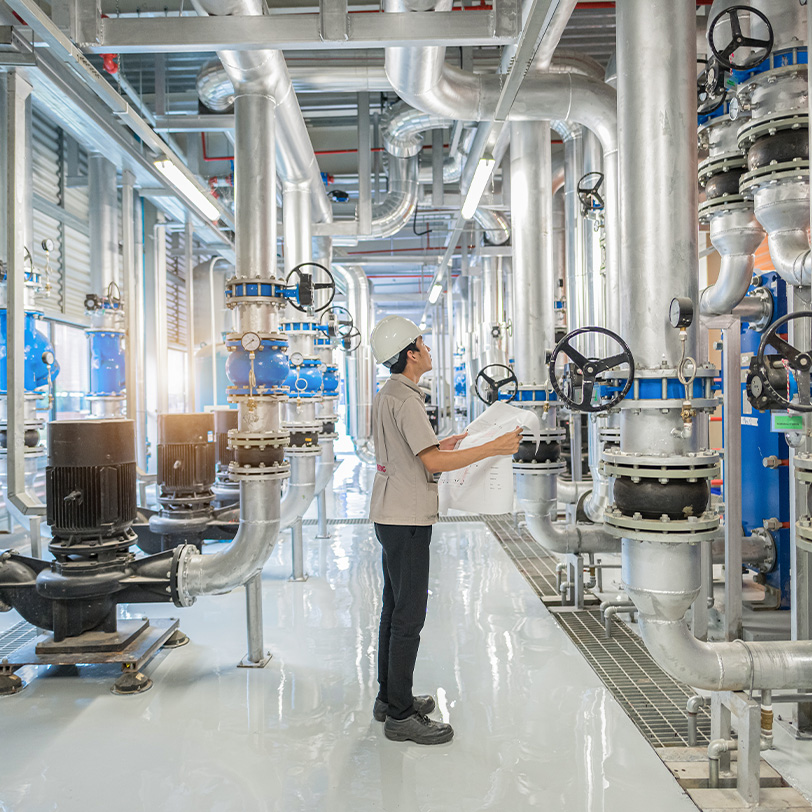
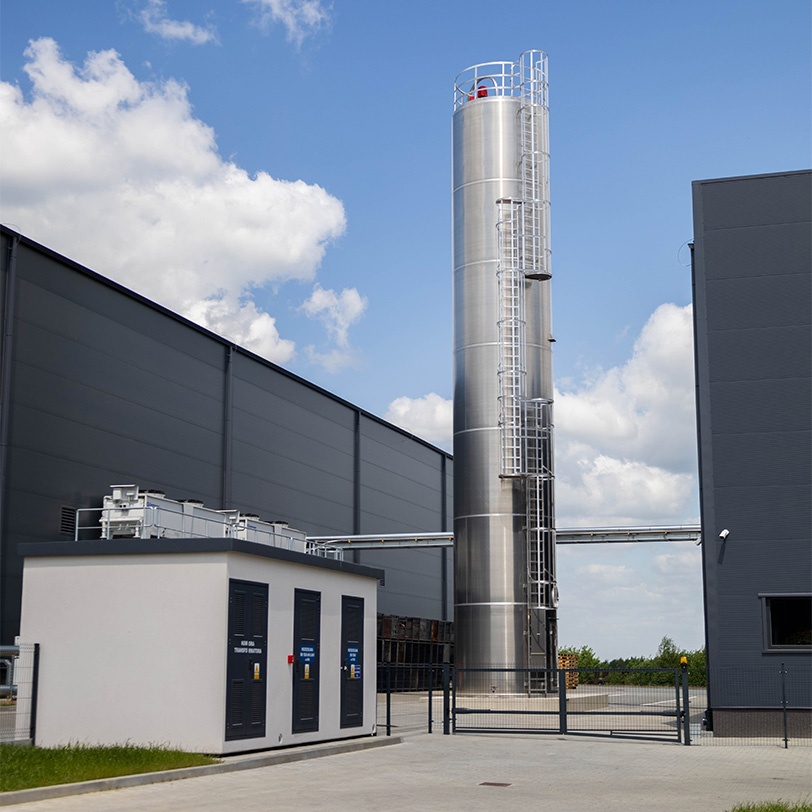
Energy efficiency means achieving maximum output with minimal energy input, thereby reducing specific energy consumption and lowering costs. Decarbonization, on the other hand, encompasses all measures aimed at reducing CO₂ emissions, such as transitioning to renewable energy sources and optimizing production processes.
Both concepts not only help meet regulatory requirements but also enhance a company’s competitiveness by lowering operating costs and promoting sustainable business practices.
An energy audit according to DIN 16247-1 is a systematic examination of the energy consumption of a company or building. It assesses the efficiency of existing processes and energy systems and identifies opportunities to reduce energy use and costs. The audit report provides concrete recommendations for optimization and helps achieve energy savings while improving the environmental performance.
There are several funding programs that support companies in implementing energy-efficient measures. Our energy efficiency experts specialize in the Federal Funding for Energy and Resource Efficiency in the Economy (EEW, BAFA). This program enables companies to finance investments in sustainable technologies through grants or loans, thereby reducing energy costs in the long term. In addition, an energy-efficient company can improve its CO₂ footprint and more easily comply with regulatory requirements.
"Form follows function" – A customized infrastructure means tailoring production facilities and technical building equipment optimally to a company’s specific process requirements. By precisely aligning building, machinery, and technology concepts, not only is efficiency increased, but the flexibility and scalability of production are also enhanced. This allows both short-term and long-term requirements to be addressed more effectively, costs to be optimized, and innovation potential to be fully leveraged. Thoughtful planning also ensures future-proof and sustainable production.
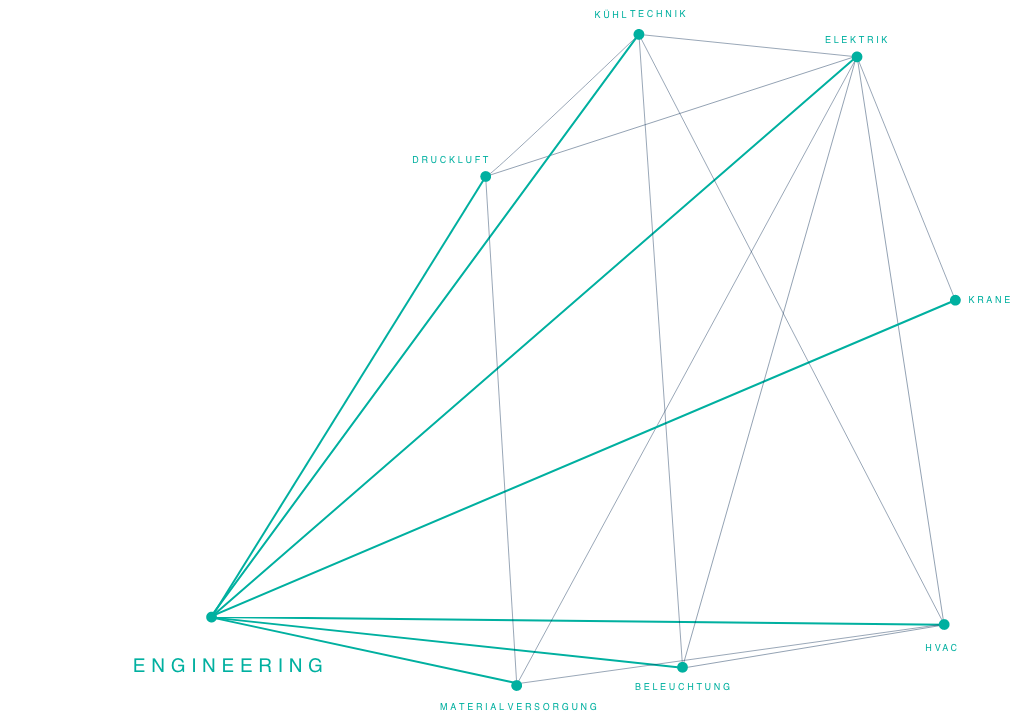
Building and operational technology encompasses all technical systems within a building that ensure its operation and user comfort. In the context of a factory, special requirements arise for conventional systems as well as for technology-specific applications. Our conceptual expertise lies in the following areas:
- Process refrigeration technology
- Heating, ventilation, and air conditioning (HVAC)
- Heat generation and storage
- Power distribution and transformer concepts
- Steam generation
- Raw material supply
- Other industry- or technology-specific applications
In accordance with process requirements, we determine your individual needs for utilities and building equipment. Based on this, technological alternatives are outlined and technical concepts are developed, which we then refine, tender, and implement. Unlike a specialist planner, we do not work with detailed specifications but rely on a functional tendering process that unlocks the innovation potential of suppliers. Our role is to validate and integrate the detailed solutions into the holistic context of the factory. The key phases are:
- Requirements Planning: Identification, structuring, and documentation of your individual technical needs
-
Concept Planning: Development and validation of technical concepts up to tender readiness
-
Functional Tendering: Fostering innovation through supplier involvement and achieving the best value for money through objective comparison
- Implementation: Everything from a single source – coordination of all parties involved, cost and schedule control