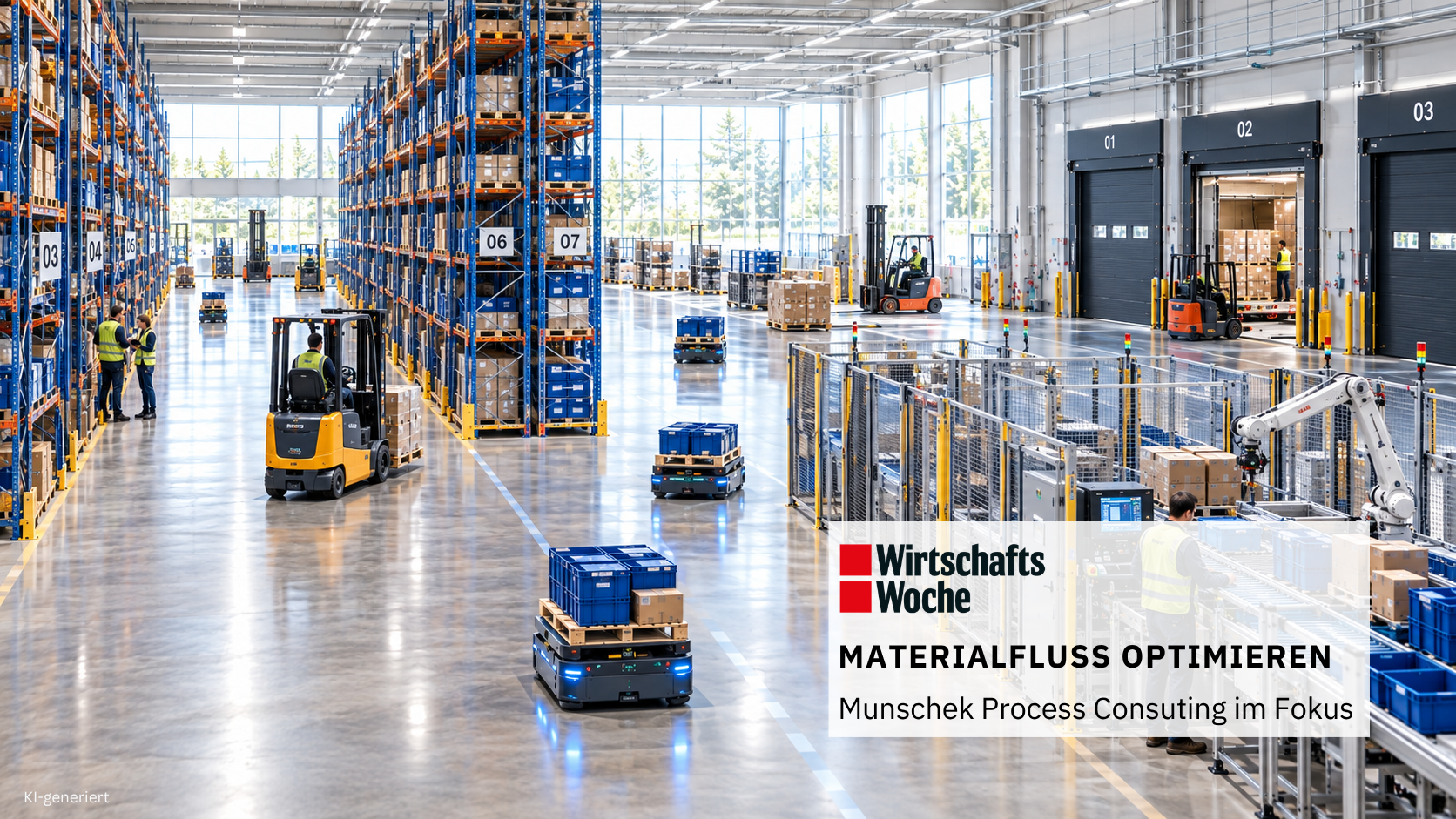
Material flows have a significant impact on production performance.
Long transport distances, unnecessary inventory, waiting times, and poorly coordinated processes often result in higher costs, longer lead times, and reduced flexibility.
However, these interdependencies often only become visible when existing capacities reach their limits or when major investments are being planned.
This is precisely where a structured material flow analysis provides value. It creates transparency regarding material flows, transport relationships, and process interfaces, thereby establishing the basis for informed decision-making in factory planning and logistics projects.
This approach becomes particularly valuable when combined with digital simulation models. Planned changes can be virtually tested before implementation.
As a result, companies gain reliable insights into capacities, bottlenecks, and future performance indicators before investing in buildings, equipment, or material handling systems.
Especially in times of increasing demands for efficiency, flexibility, and cost-effectiveness, the early analysis of material flow has become a critical success factor for industrial investment projects.
Those interested in exploring the topic in greater depth can find further insights and practical examples in the WirtschaftsWoche article: